
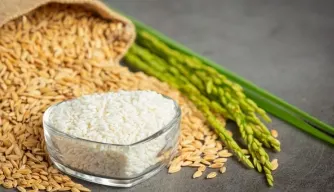
This case study explores the GST classification and rate applicability on Fortified Rice and Fortified Rice Kernels (FRK), a critical area for food manufacturers and distributors under the Public Distribution System (PDS) and nutrition schemes like POSHAN Abhiyan and Anemia Mukt Bharat.
- What is Food Fortification?
Fortification involves adding key micronutrients—Iron, Folic Acid, Vitamin B12—to staple foods like rice, enhancing their nutritional value. Fortified rice is blended with Fortified Rice Kernels (FRK) in a 1:100 ratio to ensure health benefits.
- GST Classification and Rate:
- a) Fortified Rice Kernels (FRK):
FRK, produced using rice flour and a vitamin-mineral premix, does not retain the essential characteristics of natural rice. Hence, it is classified under HSN 19049000 and attracts 18% GST as per Notification No. 1/2017-CT(R).
However, when FRK is supplied under government schemes (e.g., ICDS) for free distribution to the economically weaker sections, it qualifies for 5% concessional GST, subject to proper certification (Notification No. 11/2021-CT(R)). - b) Regular Fortified Rice (RFR):
Fortified rice, if pre-packaged and labelled, falls under HSN 1006 and attracts 5% GST (Notification No. 1/2017-CT(R)).
If unbranded/unpackaged, it is exempt under Notification No. 2/2017-CT(R). - Clarification by GST Council:
The Fitment Committee confirmed that fortified staples (including rice) fall under HSN Chapter 10 or 11, affirming the 0% or 5% tax rate based on packaging and branding status.
Conclusion:
Businesses dealing in fortified rice and FRK must carefully assess GST rates based on classification, packaging, and end-use. Misclassification may lead to incorrect GST liability, especially when FRK is sold commercially versus for public welfare schemes.